
Whimsy Desert Spins
Naiser ProductionCasual
4.450.00 Reviews
- Version
- 1.0.1
- Installs
- 10.00K
- Age Rating
- Everyone 10+
Screenshots
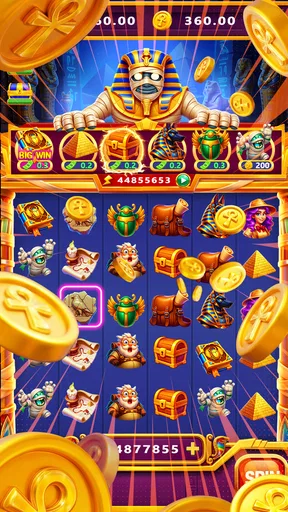

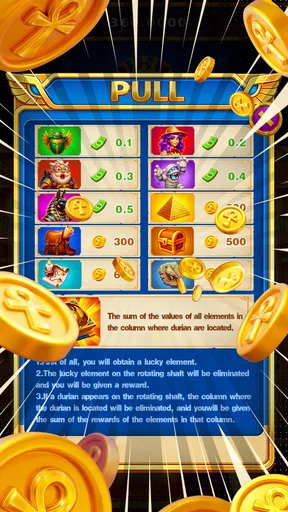

Our Review of Whimsy Desert Spins
 Analysis by Appyee
I spent time with Whimsy Desert Spins as a light casual game built around desert-themed slot play and a playful mood. Its central idea is easy to understand: open the game, take a spin, and enjoy the visual twist rather than settle into a complicated strategy system. That simplicity is its strongest quality, but it also defines its limits. This is best approached as a short-session amusement, not as a deep progression game or a substitute for a traditional casino experience.
Developed by Naiser Production, the game is free and aimed at players aged Everyone 10+. It has a 4.4 average from around a hundred ratings, with over ten thousand installs, so it has already attracted a modest audience without feeling like an enormous mainstream release. I found that context useful: this is a small, focused casual title whose appeal depends more on quick entertainment and presentation than on a large social ecosystem.
A readable desert-themed game for short, low-pressure sessions
The first thing I noticed was how quickly the basic loop makes sense. The desert setting gives the slot format a recognizable identity, while the whimsical tone keeps the presentation lighter than a serious gambling simulation. You do not need to study a long tutorial before understanding what the main interaction is supposed to be. For someone who wants a game that can be picked up between errands, that low learning curve matters.
Navigation is most comfortable when you treat the screen as a small set of primary actions rather than a menu-heavy experience. I would recommend new players take a moment to identify the spin control and any surrounding information before tapping repeatedly. In a casual game, clarity is more valuable than a crowded collection of buttons, and the desert theme works best when it frames the action instead of competing with it.
The visual style is also helpful for orientation. A themed background can make a simple game feel less bare, but it should not make the active controls disappear into decoration. My practical advice is to play at a comfortable screen brightness and avoid rushing through the first few turns. That gives you time to distinguish the main play area from secondary elements and reduces accidental taps, especially on a smaller phone.
There is a useful difference between this kind of game and a puzzle title. A puzzle normally asks you to inspect a board, remember patterns, or plan several moves ahead. Here, the cognitive demand is lighter and more immediate. That makes the game suitable for a quick mental break, but it also means players looking for meaningful decisions may find the experience thin after the novelty of the setting fades.
How the simple loop feels in everyday use
A realistic use case is a short wait at a bus stop or a few quiet minutes after finishing lunch. I could imagine opening it, taking a handful of spins, and closing it without needing to remember a complicated objective. The game fits that moment because it does not ask for a long uninterrupted commitment. It is easier to leave and return to than a narrative adventure or a match-based competitive game.
That same convenience can work against it during longer sessions. Once you understand the rhythm, the activity can become repetitive. The whimsical desert presentation provides atmosphere, but atmosphere alone cannot replace variety. I would not choose this as my main evening game if I wanted changing challenges, character development, exploration, or a strong sense of mastery.
Players should also understand what “free” means in practical terms here: the game itself costs nothing to obtain. That makes it easy to try without a purchase decision, but free casual games can still be less satisfying for people who prefer a clearly structured campaign or a substantial long-term goal. I would start with short sessions and decide based on whether the repeated spin loop remains enjoyable rather than assuming the theme will carry the experience indefinitely.
Readability, attention, and the desert presentation
For readability, the most important factor is not the number of available options but the relationship between the active controls, symbols, and decorative background. A whimsical desert setting can be visually inviting, yet players with reduced contrast sensitivity may need to pay closer attention when the screen contains similarly colored elements. I would avoid playing in glare and would use the phone’s normal display settings to keep symbols as distinct as possible.
People who are sensitive to motion, flashing effects, or busy visual changes should approach cautiously. Slot-style games often communicate outcomes through animated transitions or celebratory screen activity, and even a lighthearted presentation can become tiring if the eye has to follow too much movement. I cannot treat the game as having a dedicated reduced-motion mode, so anyone who knows that animated reward sequences cause discomfort should test a brief session first.
Players with color-vision differences may also find that relying on color alone is less comfortable than relying on the shape or position of symbols. My tip is to watch for repeated visual patterns rather than trying to identify every element by hue. If the game presents important distinctions through multiple cues, that helps; if a result is mainly color-based, it may take more concentration.
The age guidance of Everyone 10+ is worth taking seriously even though the game is casual. Parents should consider whether the slot-like format fits their household expectations and whether a child understands that animated outcomes are part of a game loop rather than a promise of real-world reward. The age label gives a useful starting point, but it does not replace a parent’s judgment about how a particular child responds to chance-based play.
Motor comfort and the cost of repeated tapping
From a motor perspective, the appeal is the limited interaction. You are not steering a character through a complicated level, dragging objects across a board, or coordinating several buttons at once. That can make the game more approachable for someone who finds fast action games tiring. A player with limited dexterity may appreciate being able to focus on one main action at a time.
Still, simple does not automatically mean accessible. Repeated tapping can become uncomfortable for people with hand pain, tremors, or fatigue. I would use a supported grip, keep the phone on a stable surface, and play in brief intervals rather than trying to maintain a long streak. If the game expects precise taps on a small control, a larger screen may feel easier than a compact phone, although the experience will naturally depend on the device.
The best workflow for motor comfort is to slow down. There is little reason to treat each spin as a reflex test. Pause between actions, check that the previous result has finished displaying, and avoid holding the phone in a strained position. This is a small adjustment, but it turns the title into a more manageable option for casual players who cannot comfortably perform rapid repeated gestures.
On the other hand, people who need keyboard controls, switch access, voice commands, or highly adjustable touch targets should not assume that a straightforward interface will meet those needs. I would place this game in the “easy to try, but device-dependent” category. Its limited action set is encouraging, yet the practical experience still depends on how comfortably your phone responds to individual taps.
Playing in different situations
Whimsy Desert Spins works best when you can give the screen your full attention for a few minutes. It is not a good choice while walking, crossing a street, or doing anything that requires environmental awareness. The low complexity may make it tempting to play absent-mindedly, but a phone game still draws attention away from the world around you.
It can fit quiet environments because the core action is self-contained and does not require coordination with other players. That makes it more suitable for a waiting room or a personal break than a shared group activity. If you are in a setting where sound could disturb others, I would keep the phone muted or at a low level. A casual game should be easy to put away when a conversation, announcement, or task begins.
For travel, the main advantage is the short-session format. You can use it as a small distraction rather than committing to a long story. However, I would not build a travel plan around it without first checking how it behaves in your usual conditions, such as weak connectivity or restricted phone use. The game is free and runs on devices using Android 7.0 or later, but compatibility with an operating system does not automatically answer every practical question about how it will fit your particular journey.
The current version is 1.0.1, which makes me view it as a relatively early-stage release rather than a mature, feature-rich platform. That is not a criticism by itself. Small games can be enjoyable precisely because they stay focused. It does mean I would judge it by the quality of the present loop and not expect the breadth of a long-established casual franchise.
Where the experience may fall short
The clearest limitation is depth. If you enjoy planning, collecting, unlocking, or improving a skill over many sessions, the slot format may not give you enough to work toward. The desert theme creates a pleasant wrapper, but the underlying activity remains intentionally simple. I would skip this game if my priority were strategic decision-making or a rich progression system.
There is also a possible attention barrier for players who dislike chance-driven repetition. Even without treating the game as serious gambling, the repeated spin structure can feel passive. Some people enjoy watching an outcome unfold; others want every tap to express a decision. If you belong to the second group, a match-three puzzle, word game, or turn-based casual title will probably offer more control and a stronger feeling that your choices matter.
Another trade-off is the relationship between decoration and information. The desert mood is part of the attraction, but themed graphics can become tiring if they make symbols harder to distinguish. Players with visual processing difficulties should not judge the game only from its cheerful appearance. The real question is whether the active elements remain comfortable to identify during repeated play. A short trial is more useful than assuming that a colorful interface will be easy for everyone.
People who need extensive accessibility customization may also find the experience less suitable than a game designed around adjustable text, remappable controls, or explicit sensory settings. I would choose another option when those controls are essential rather than optional. By contrast, someone who mainly wants a low-pressure tap-based distraction may find the limited interaction a genuine advantage.
Who I would recommend it to
I would recommend this game to adults and older children who enjoy playful slot-inspired presentation, want a free casual distraction, and are happy with short, repetitive sessions. It is particularly approachable for players who do not want to learn a complicated ruleset before having fun. The desert theme gives the basic loop enough personality to feel more distinctive than a completely plain spinner.
I would also suggest it to someone looking for a calmer alternative to action games. There is no need to manage a character, compete against a timer, or memorize a large set of commands. That can make it a reasonable choice after work or during a quiet pause, provided the player is comfortable with the chance-based format and does not expect a deep campaign.
I would not recommend it as the first choice for someone seeking a long-term hobby, a social game, a demanding puzzle, or a highly configurable accessible interface. A traditional puzzle game is better when you want decisions to shape the result. A narrative casual game is better when you want discovery and emotional progression. A competitive title is better when you want interaction with other players. This one earns its place through immediacy, not breadth.
My inclusive verdict after using it
My overall impression is that Whimsy Desert Spins succeeds when its purpose is kept clear: it is a small, cheerful casual game for taking a few spins during a spare moment. Its free entry, familiar interaction, and desert styling make it easy to approach, while its modest scale keeps the experience uncomplicated. I appreciate that it does not demand the commitment associated with larger games.
Its inclusive potential comes mainly from the limited number of actions, not from a broad set of confirmed customization tools. That distinction matters. Players with mild motor limitations may find the single-action rhythm manageable if they pace themselves, while players with visual, motion, or input needs should test the game under comfortable conditions. Screen glare, small controls, repeated tapping, and animated outcomes can all change the experience from one person to another.
My best advice is to treat it as a short-session experiment. Play in a quiet, well-lit position, keep the phone stable, and stop when the repeated motion or visual activity becomes tiring. If the first few sessions feel pleasant, the game can serve as a simple break-time companion. If you need strong control over motion, text presentation, input methods, or long-term progression, another casual game will likely be a better fit.
For me, the final verdict is positive but measured: this is a charming, focused free game rather than a complete all-purpose entertainment package. Naiser Production has chosen a narrow idea and wrapped it in a whimsical desert atmosphere. That focus will appeal to players who want immediate, uncomplicated fun. It will not satisfy everyone, especially those who need deep systems or extensive ability-focused options, but for the right player, a few relaxed spins can be exactly enough.
Verdict
Strengths of Whimsy Desert Spins
- Bright desert-themed graphics make the slot easy and enjoyable to follow.
- Simple controls let new players start spinning without a steep learning curve.
- Quick rounds suit short gaming sessions on mobile devices.
- The whimsical theme gives the game a light, playful atmosphere.
- Runs well for casual play without requiring advanced gaming skills.
Limitations of Whimsy Desert Spins
- Slot outcomes rely on chance, so consistent wins are not guaranteed.
- Repeated spins may feel monotonous for players seeking varied gameplay.
- Some features or rewards may depend on watching ads or making purchases.
- The colorful presentation may not appeal to players who prefer realistic themes.
- Availability and features can vary between Android and iOS versions.
Similar Picks in This Category
View All
My Talking Angela
Outfit7 Limited4.2

My Talking Tom
Outfit7 Limited4.3

Pou
Zakeh4.2

My Talking Tom 2: Pet Game
Outfit7 Limited4.3

Candy Crush Saga
King4.6

Bridge Race
Supersonic Studios LTD4.1
Frequently Asked Questions
What is Whimsy Desert Spins?
Whimsy Desert Spins is a desert-themed casual slot-style game built around colorful visuals, spinning reels, and whimsical characters. Players spin to discover matching symbols, trigger bonus features, and progress through the game’s themed content. Its presentation is designed for quick, entertaining sessions, making it suitable for users who enjoy simple gameplay with a light fantasy atmosphere.
Is Whimsy Desert Spins free to download and play?
The game can generally be downloaded and started without an upfront purchase, but availability and pricing may vary depending on whether you use Android or iOS. Like many free-to-play titles, it may include optional in-app purchases, advertisements, or other monetization features. Before downloading, check the store listing for the current purchase details and review your device’s payment settings.
Does Whimsy Desert Spins use real money or offer real-money prizes?
Whimsy Desert Spins should be treated as an entertainment game rather than a way to earn money. Any coins, rewards, or bonuses earned during play are normally virtual items intended for use inside the app and cannot automatically be exchanged for cash. Users should carefully read the official store description and the game’s terms, especially if optional purchases or age restrictions apply in their region.
Can I play Whimsy Desert Spins offline?
Offline functionality may be limited. Some basic gameplay elements could work without a constant connection after the app has loaded, but features such as advertisements, cloud saving, events, updates, account synchronization, and purchases may require internet access. For the most reliable experience, launch the game while connected to Wi-Fi or mobile data and confirm its current requirements on the official app-store page.
Is Whimsy Desert Spins suitable for children?
Suitability depends on the game’s current content, advertising, in-app purchases, and the age rating assigned by Google Play or the App Store. Although its colorful desert theme may look family-friendly, parents should review the store rating, privacy information, and purchase options before allowing a child to play. Parental controls and purchase authentication are recommended on shared devices.
Play our best games!


